Which materials is an Apron Feeder suitable for?
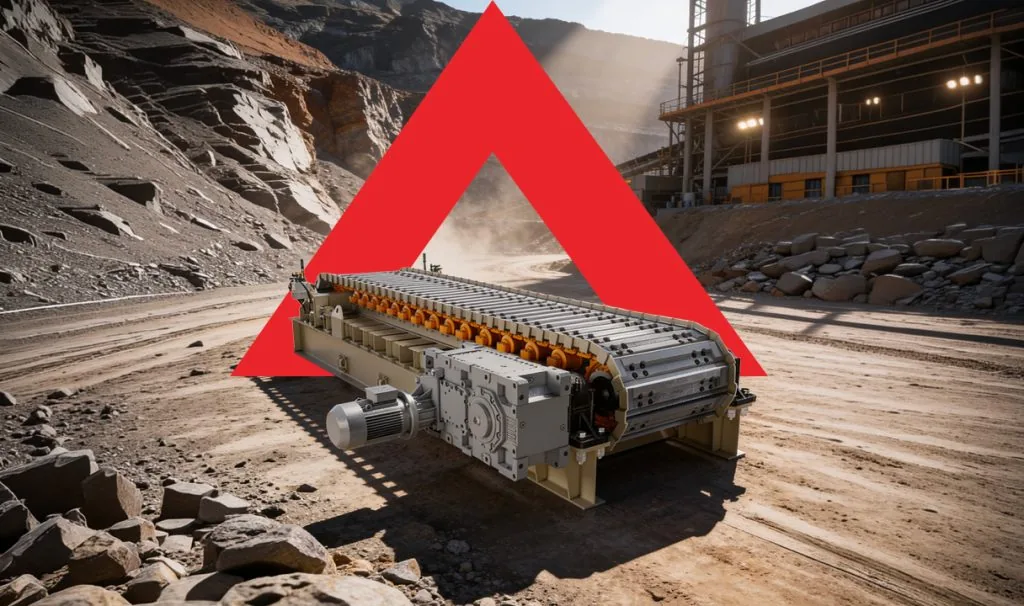
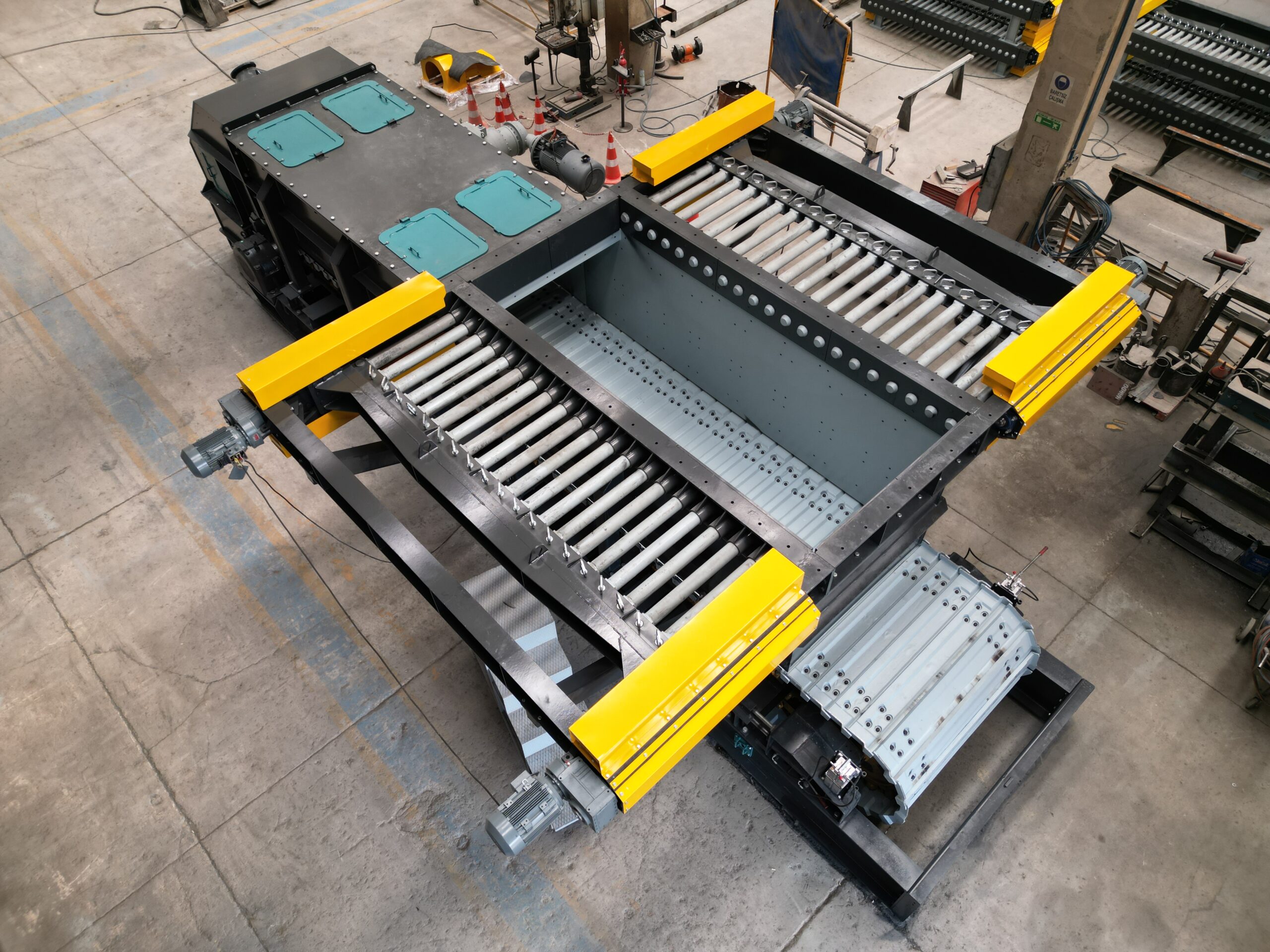
It is ideal for handling heavy, abrasive, sticky, dusty, or moist bulk materials—such as run-of-mine ores, wet clay, coal, and large boulders—eliminating the bridging and clogging issues commonly encountered with vibrating feeders.
How does it work?
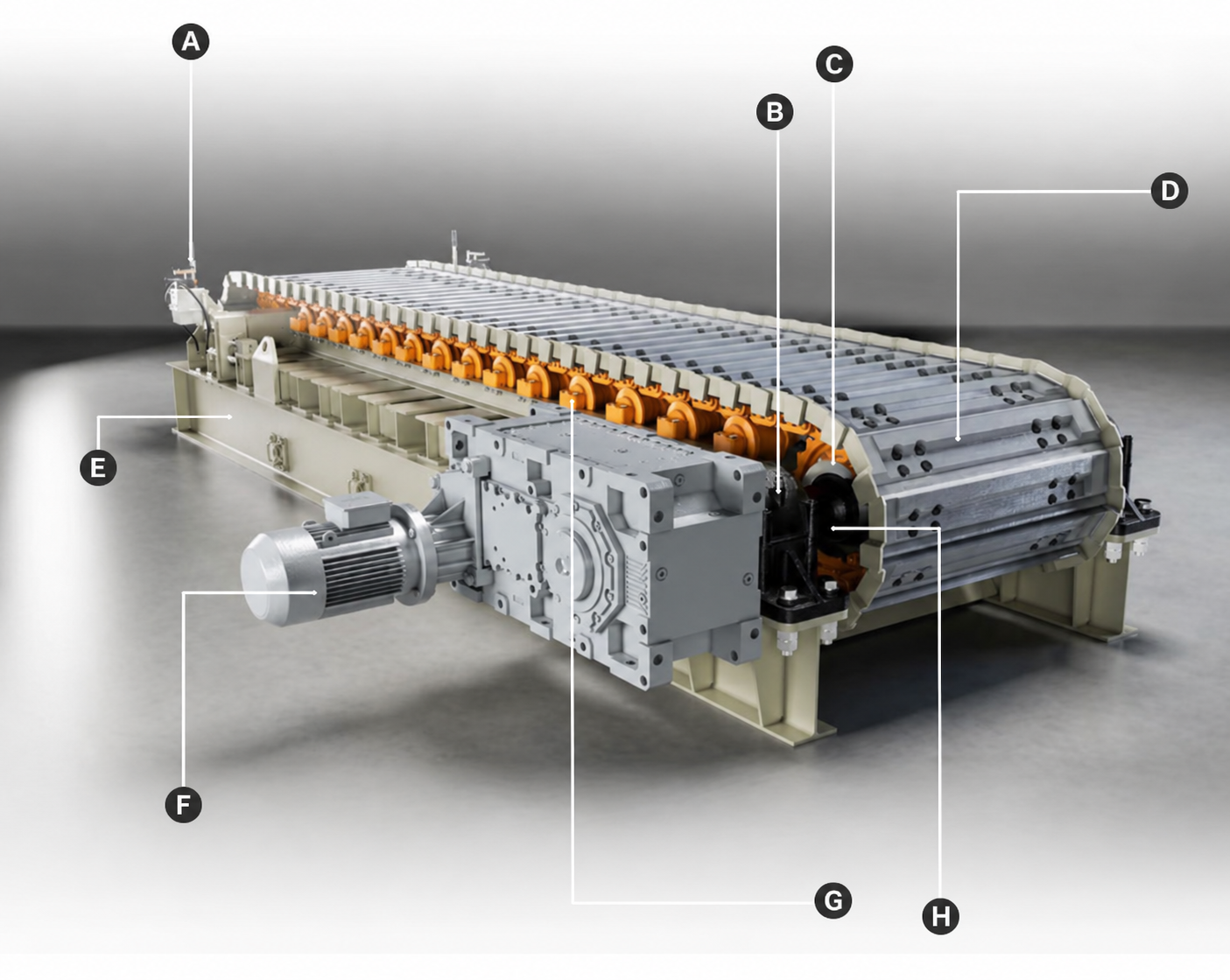
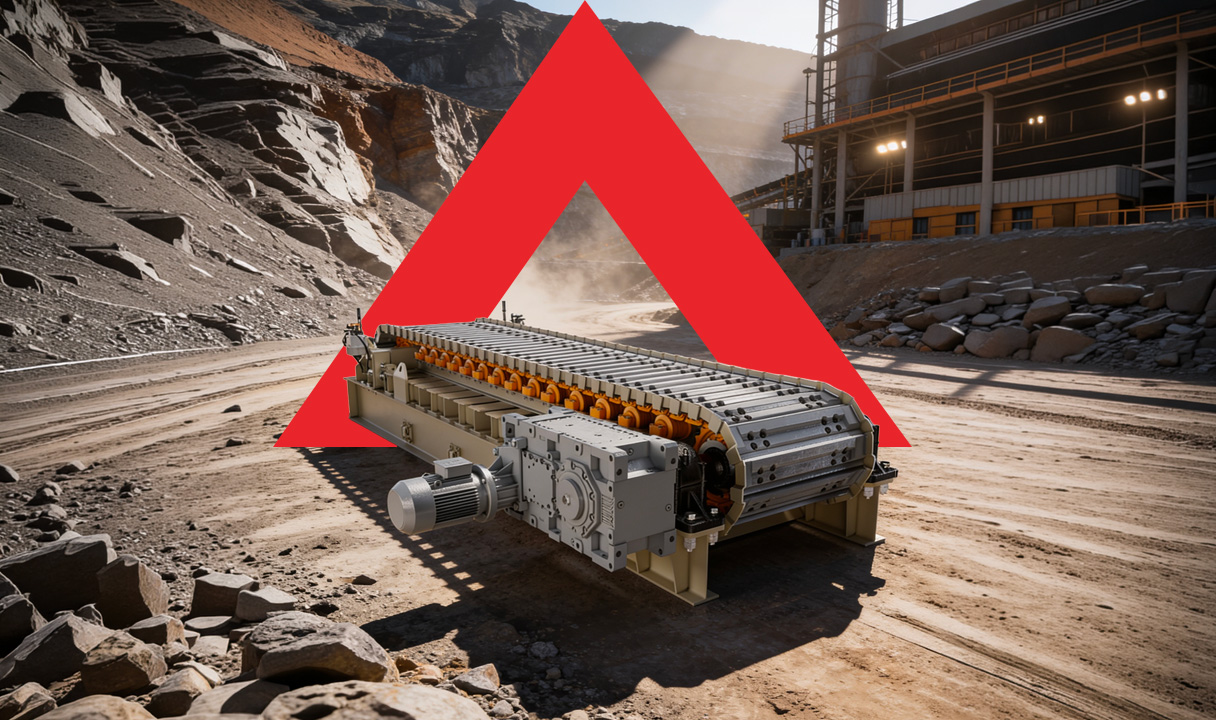
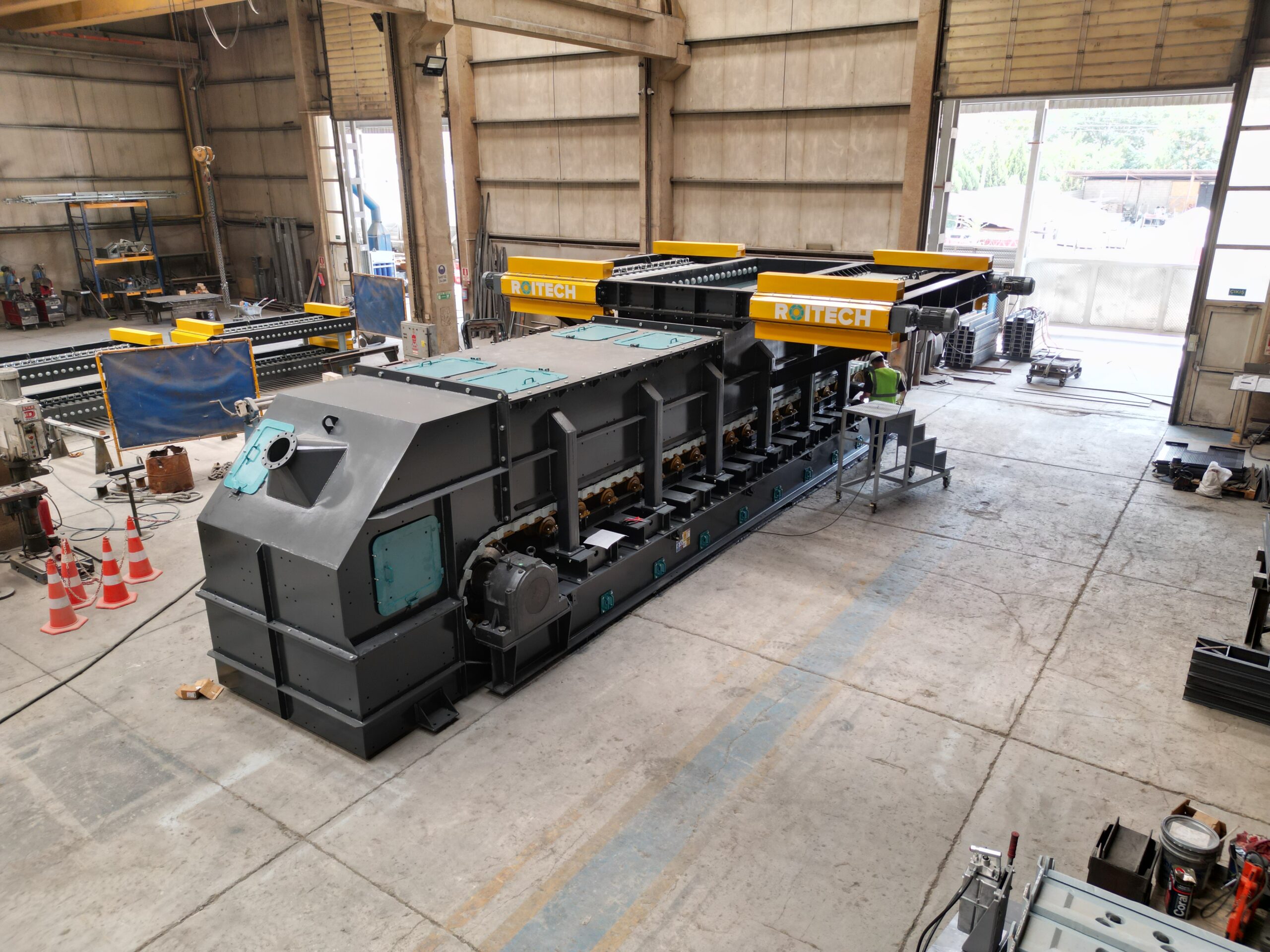
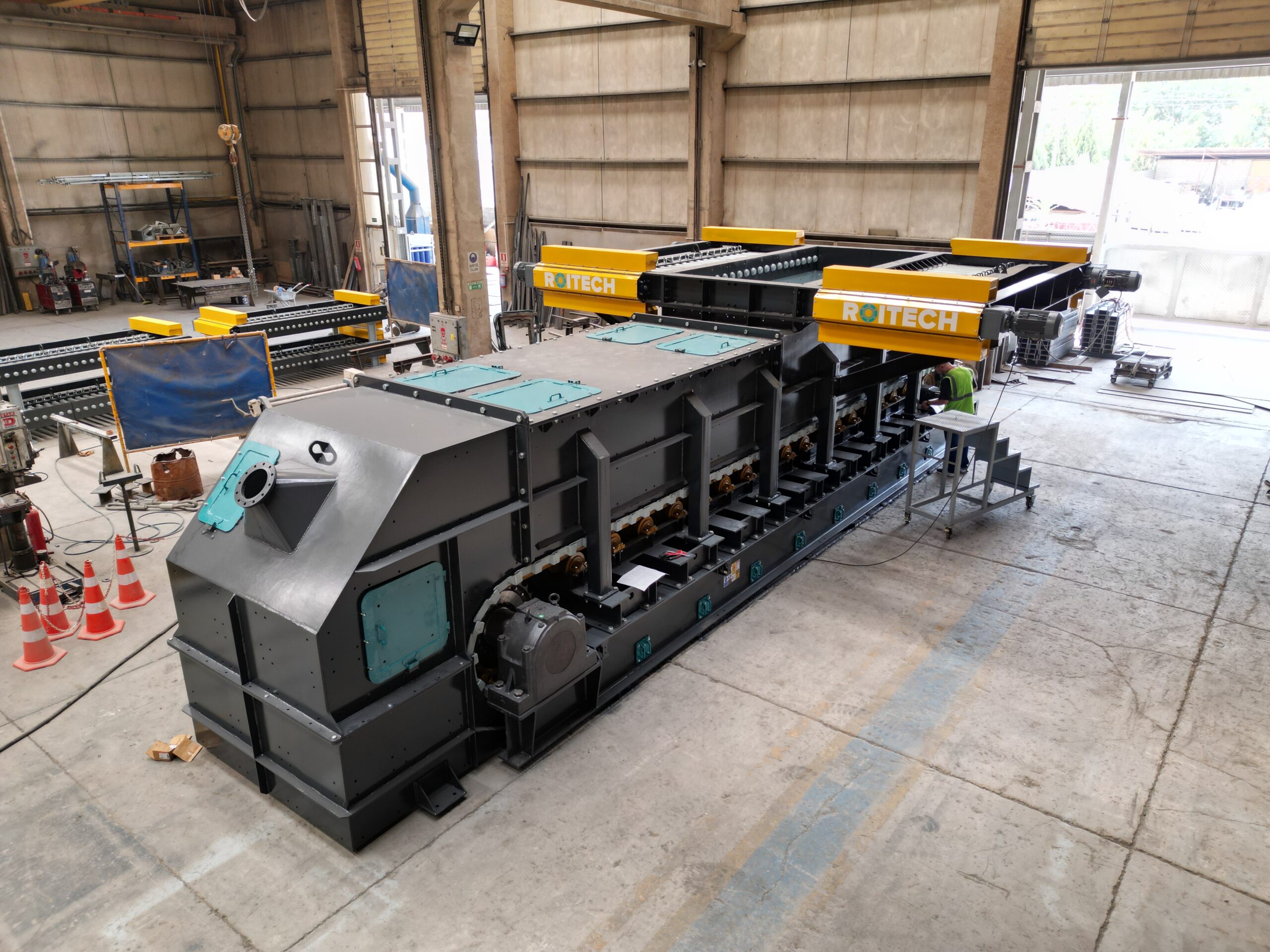
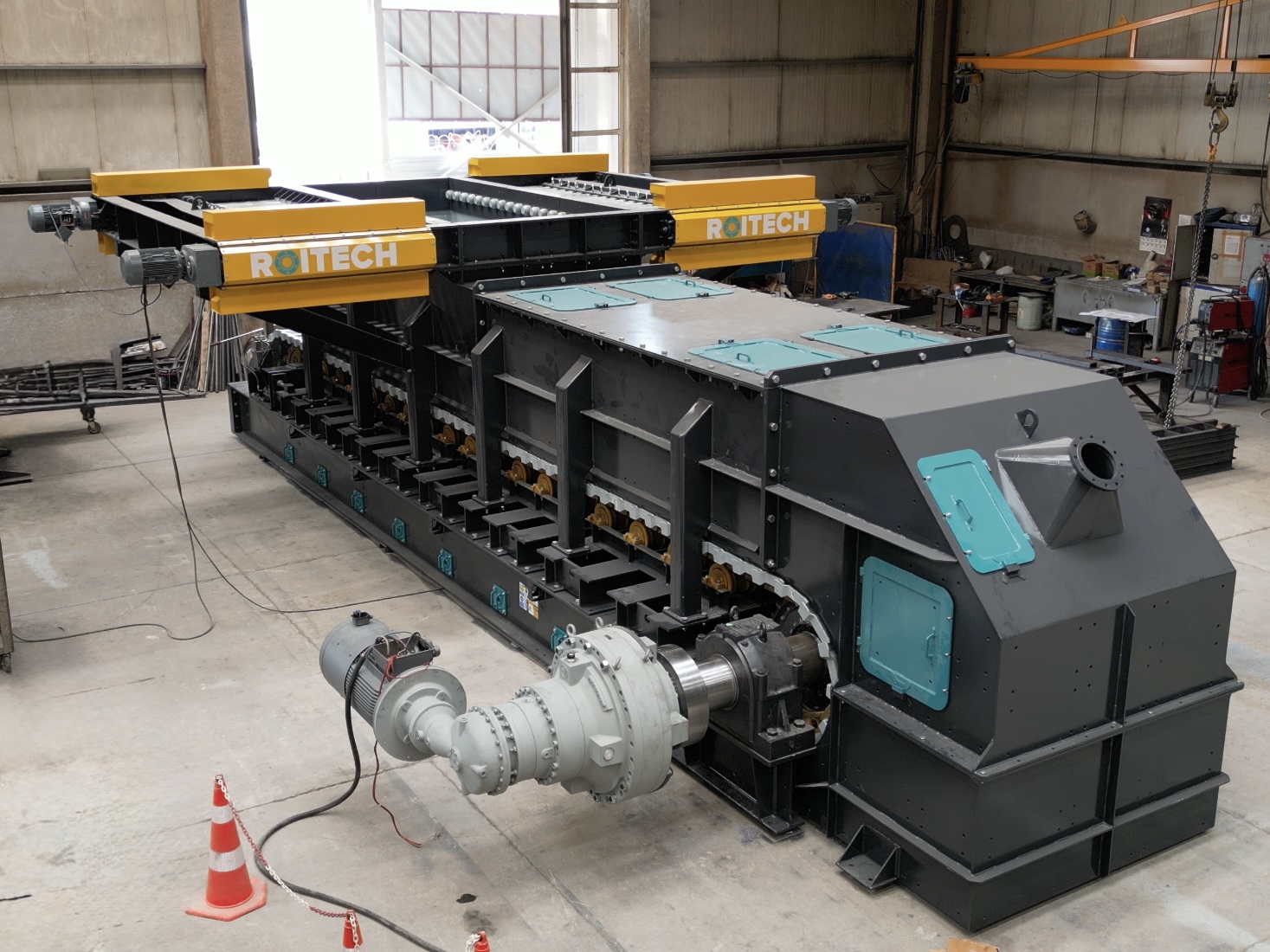
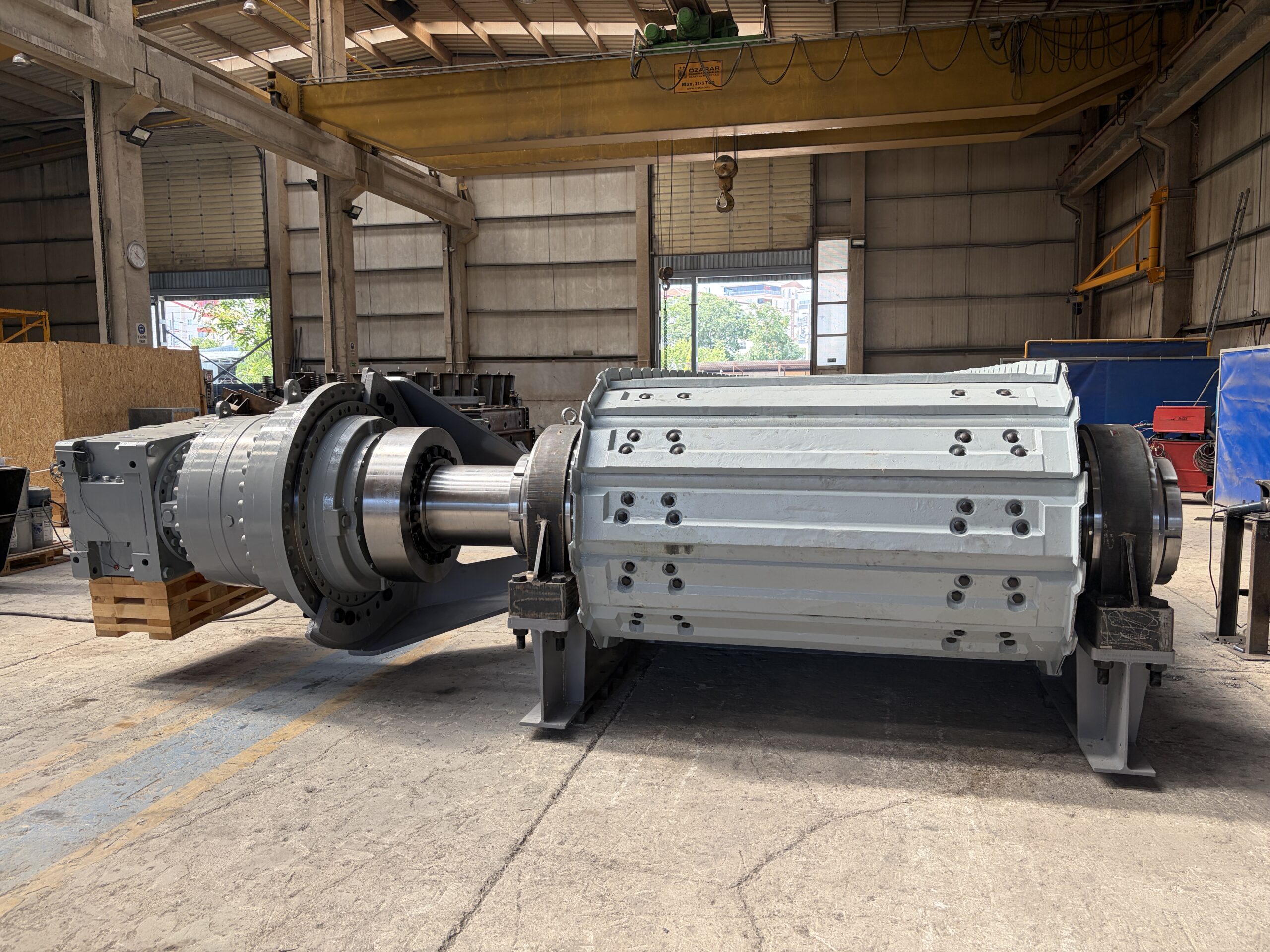
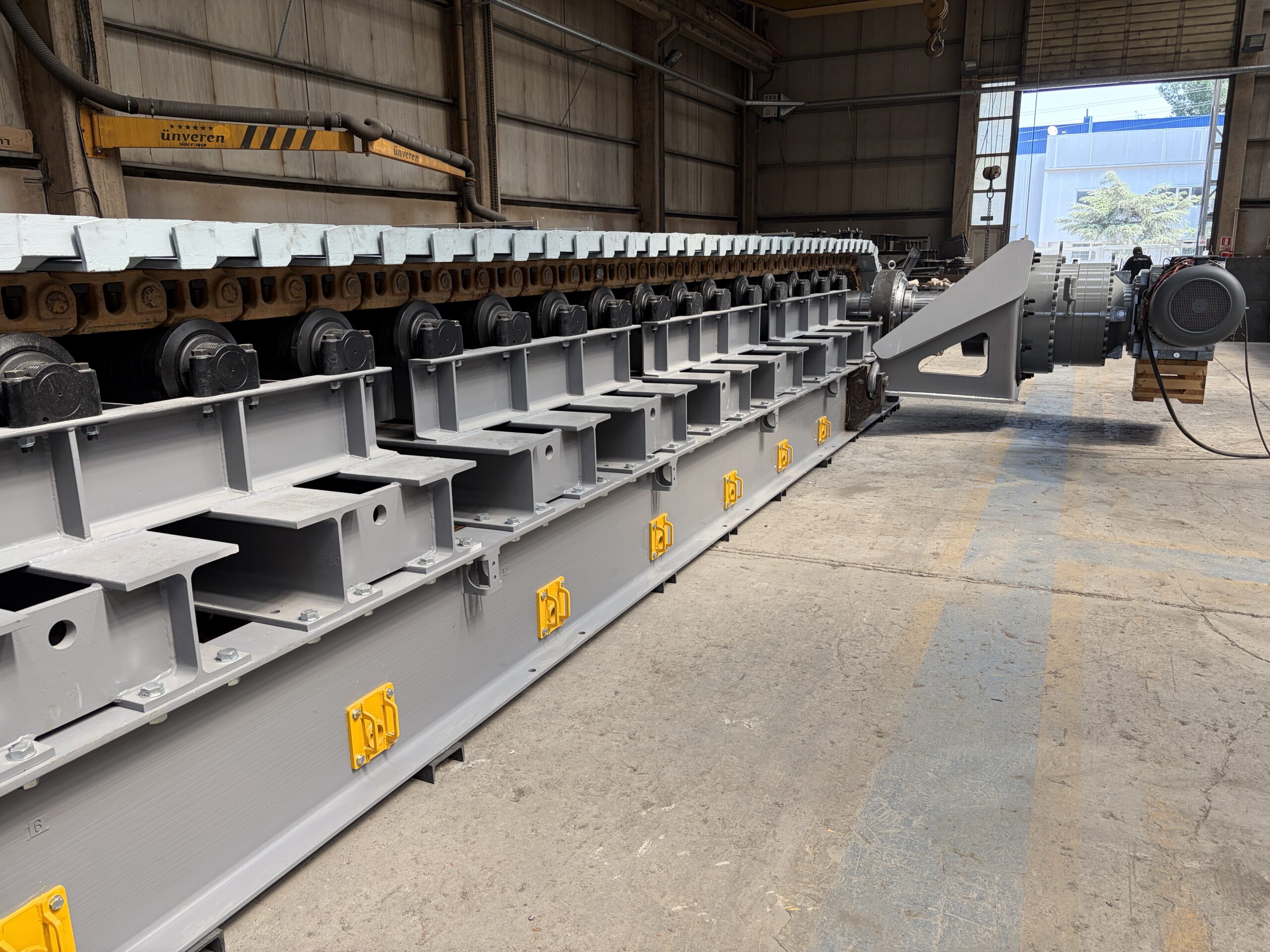
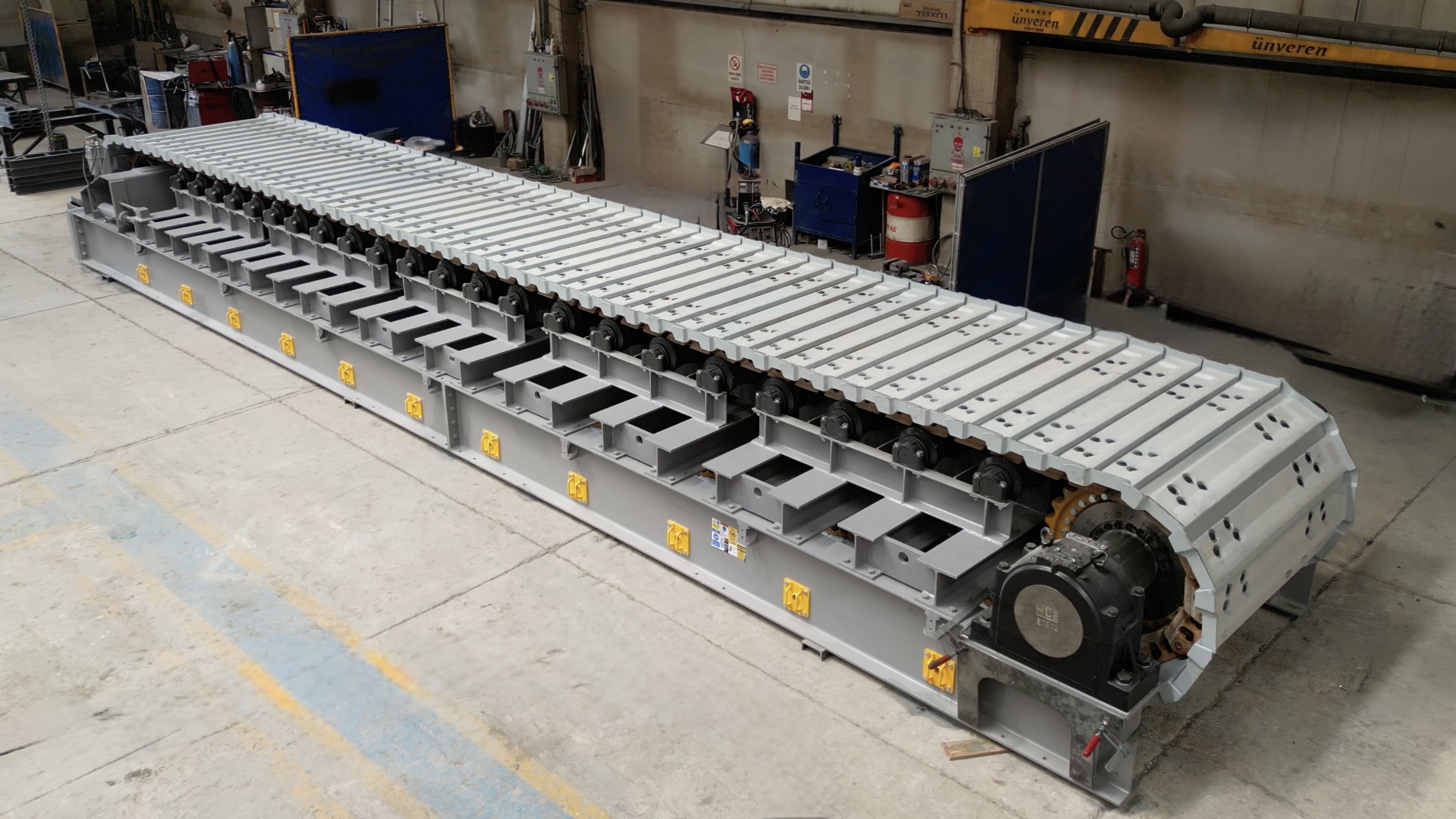
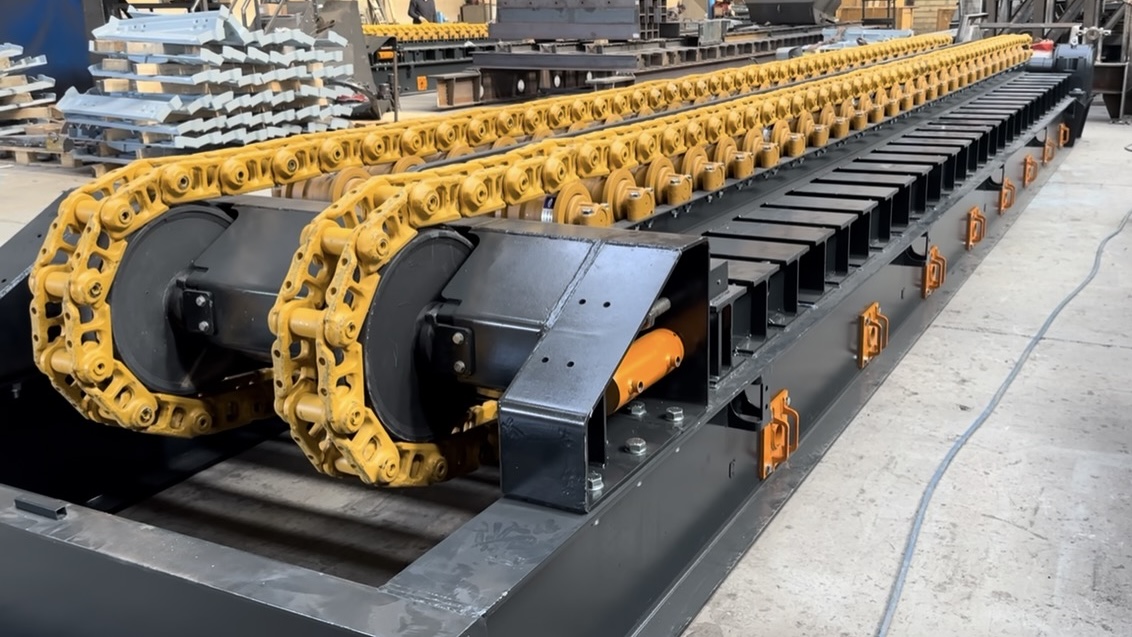
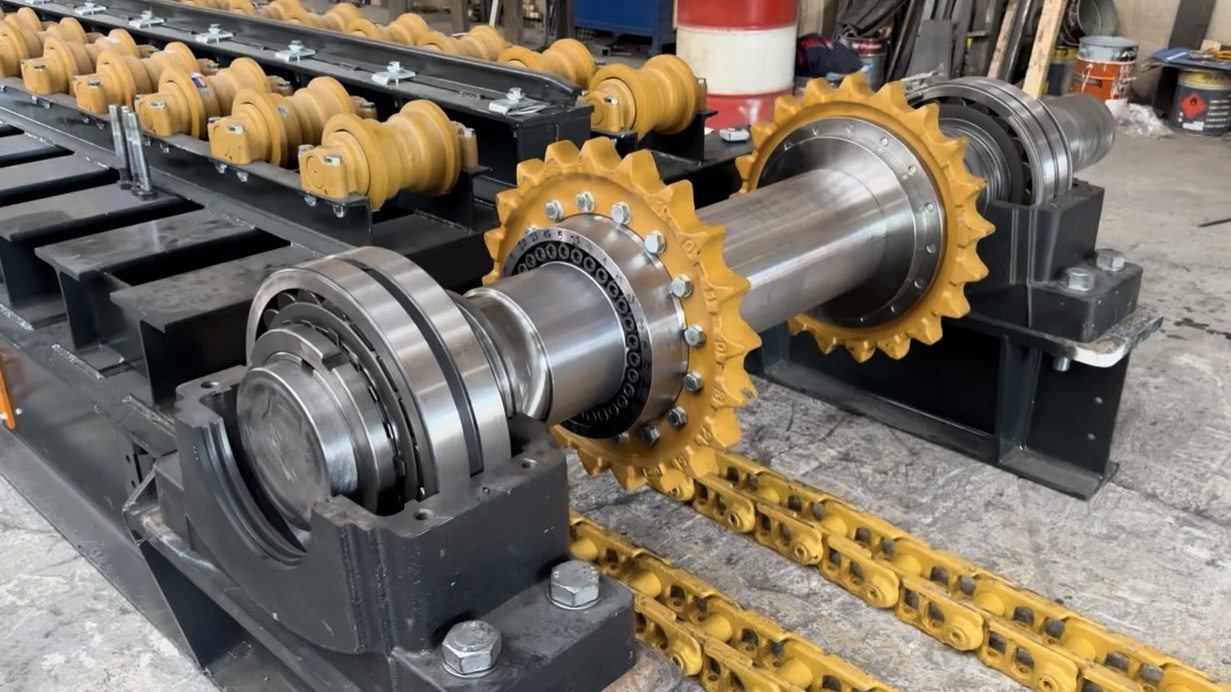
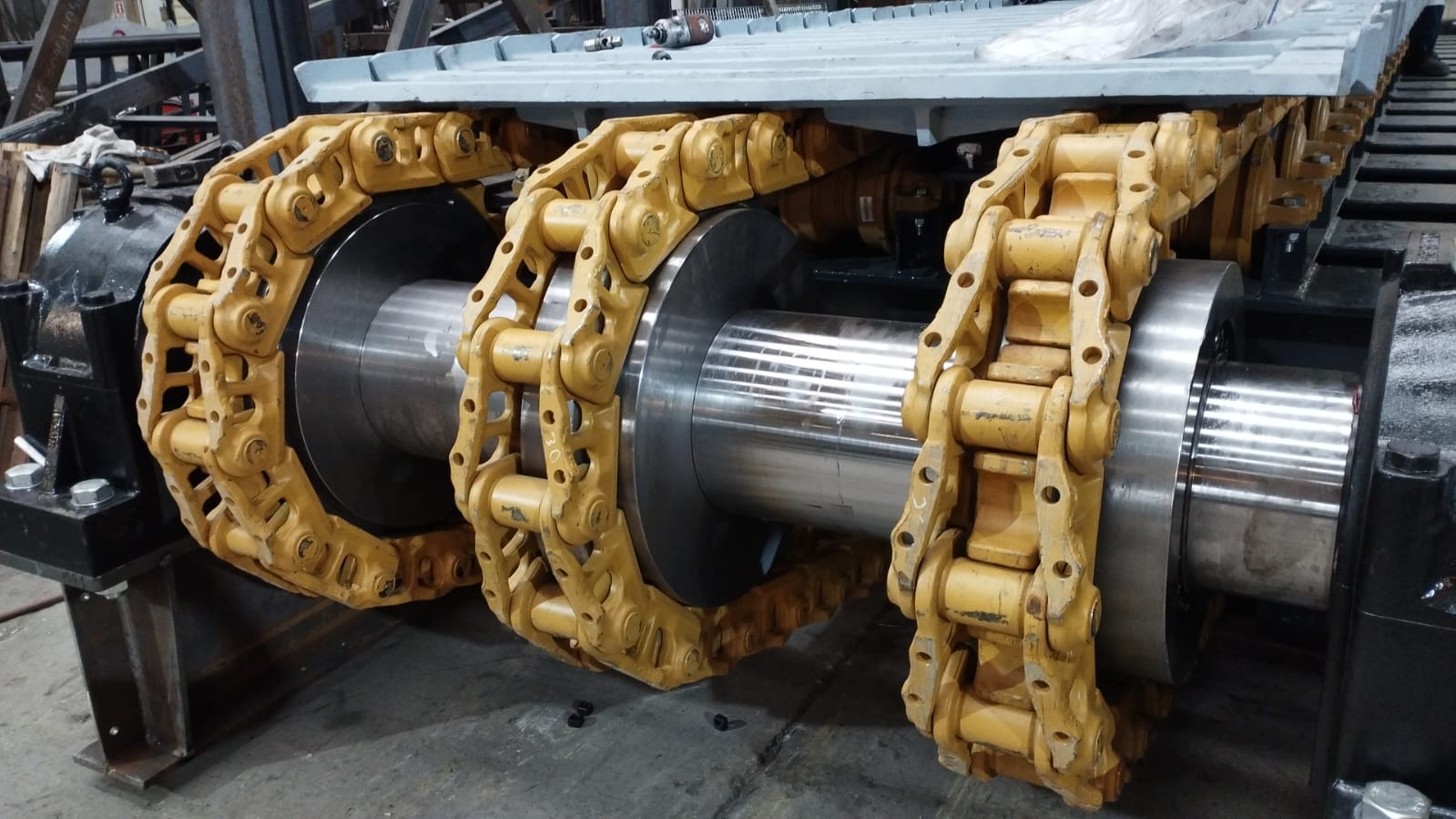
Wear-resistant flights bolted onto heavy-duty chains are driven via a gearbox and sprocket arrangement, conveying material forward at a steady, controlled feed rate even under extreme hopper loads.
What are the flights made of?
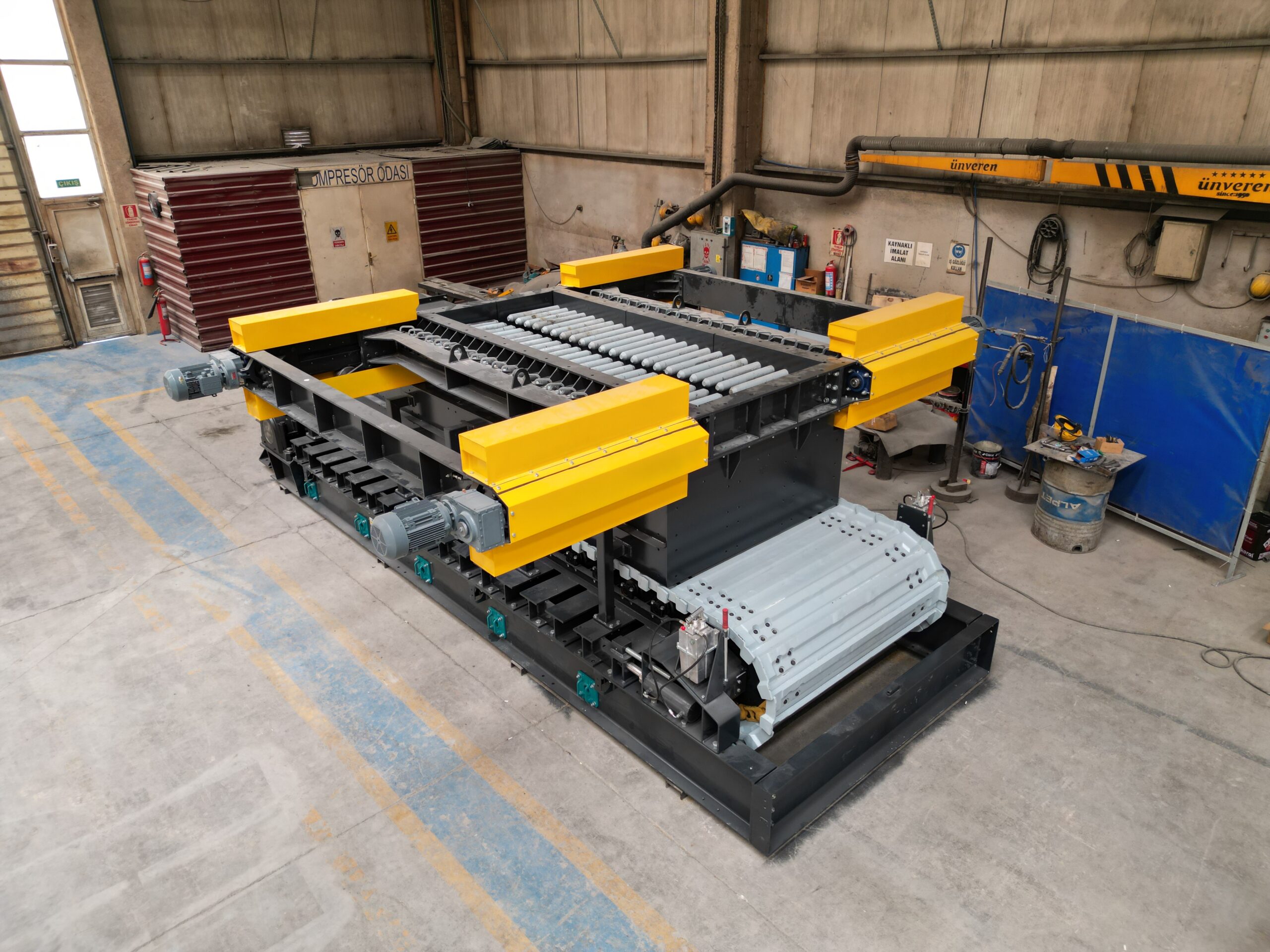
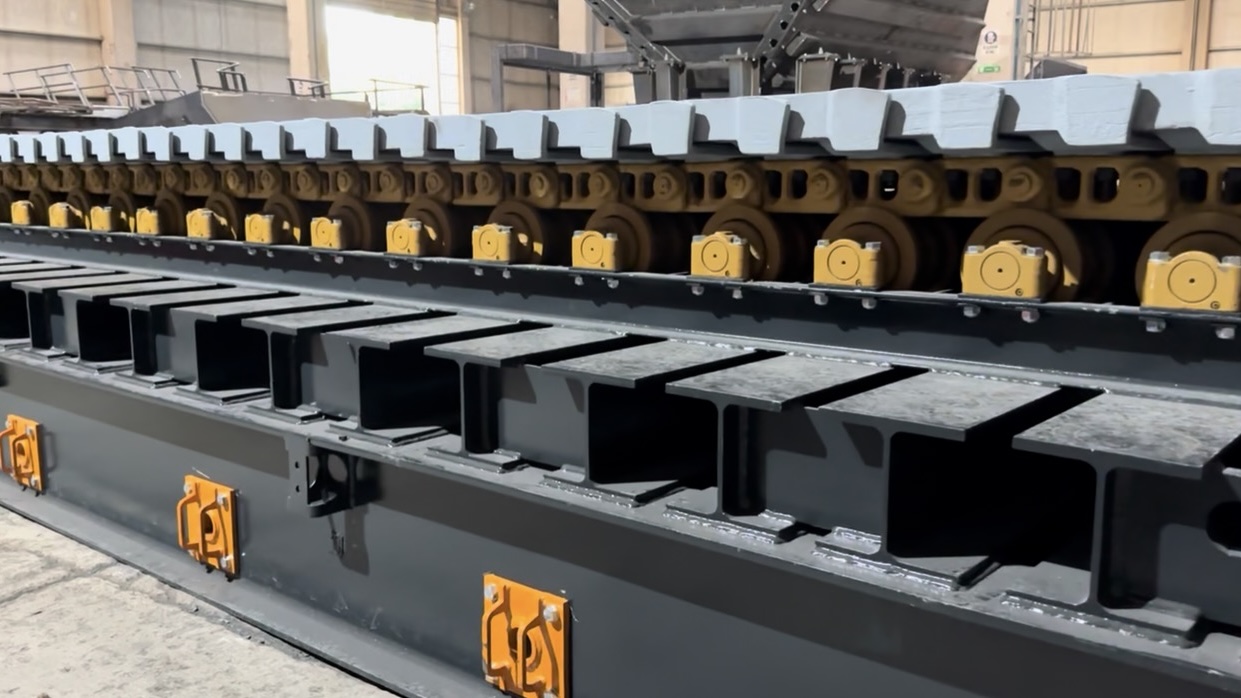
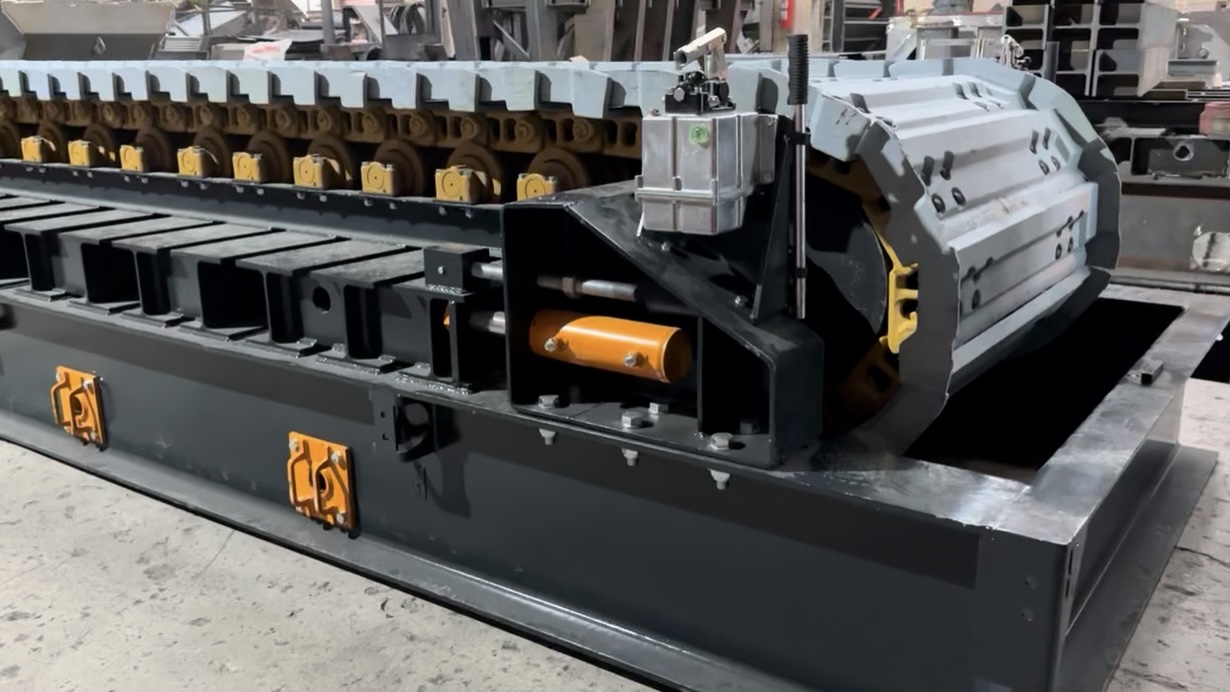
Heavy-duty cast carbon steel (or manganese steel for highly abrasive duties) flights are used, engineered with overlapping edges to prevent material spillage and withstand severe impact loads.
How is the tensioning system adjusted?
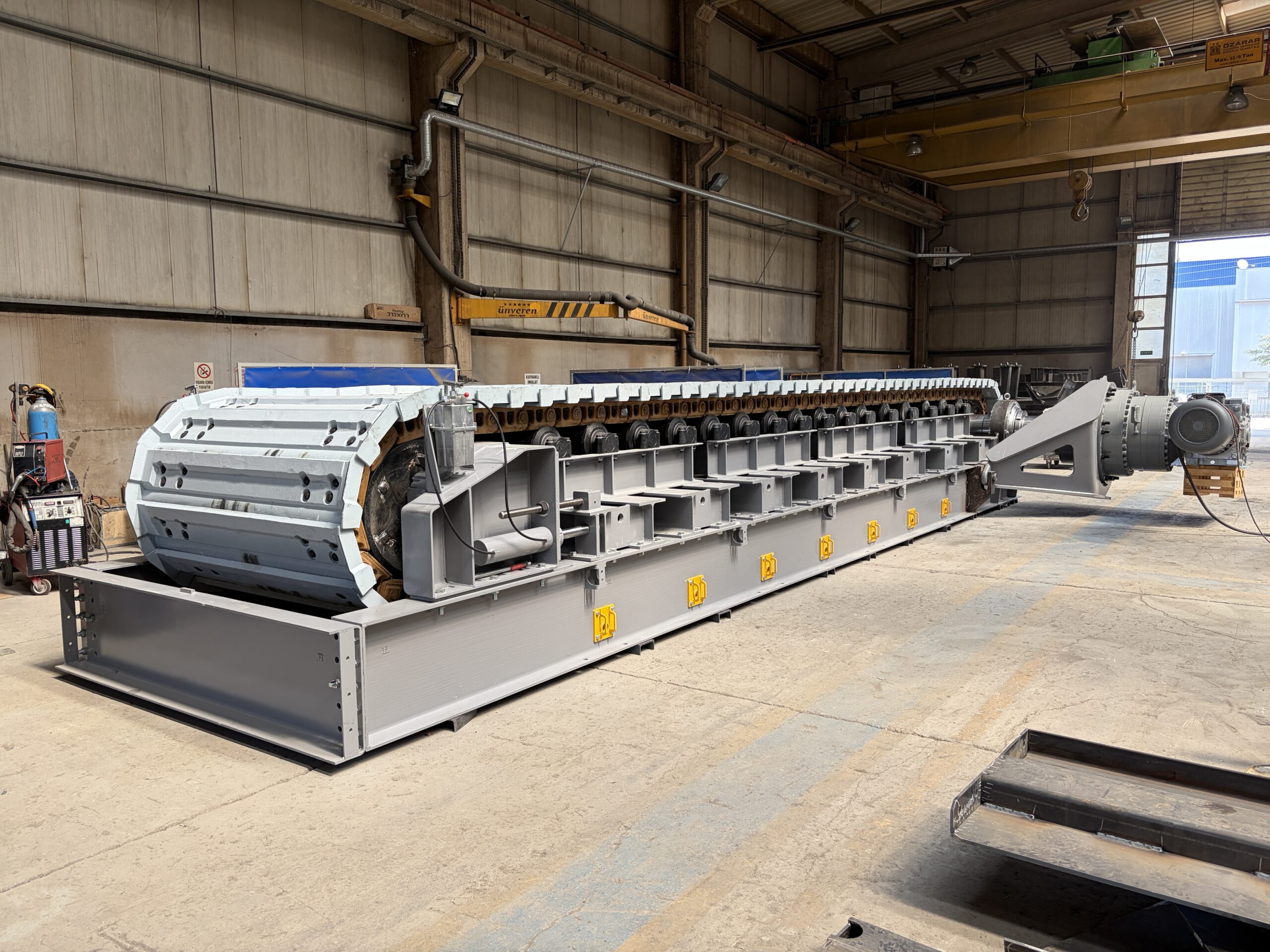
The chain tensioning system is precisely and easily adjusted via a hydraulic hand pump acting on tensioning cylinders, ensuring optimal chain alignment and minimal maintenance effort.
What is the undercarriage like?
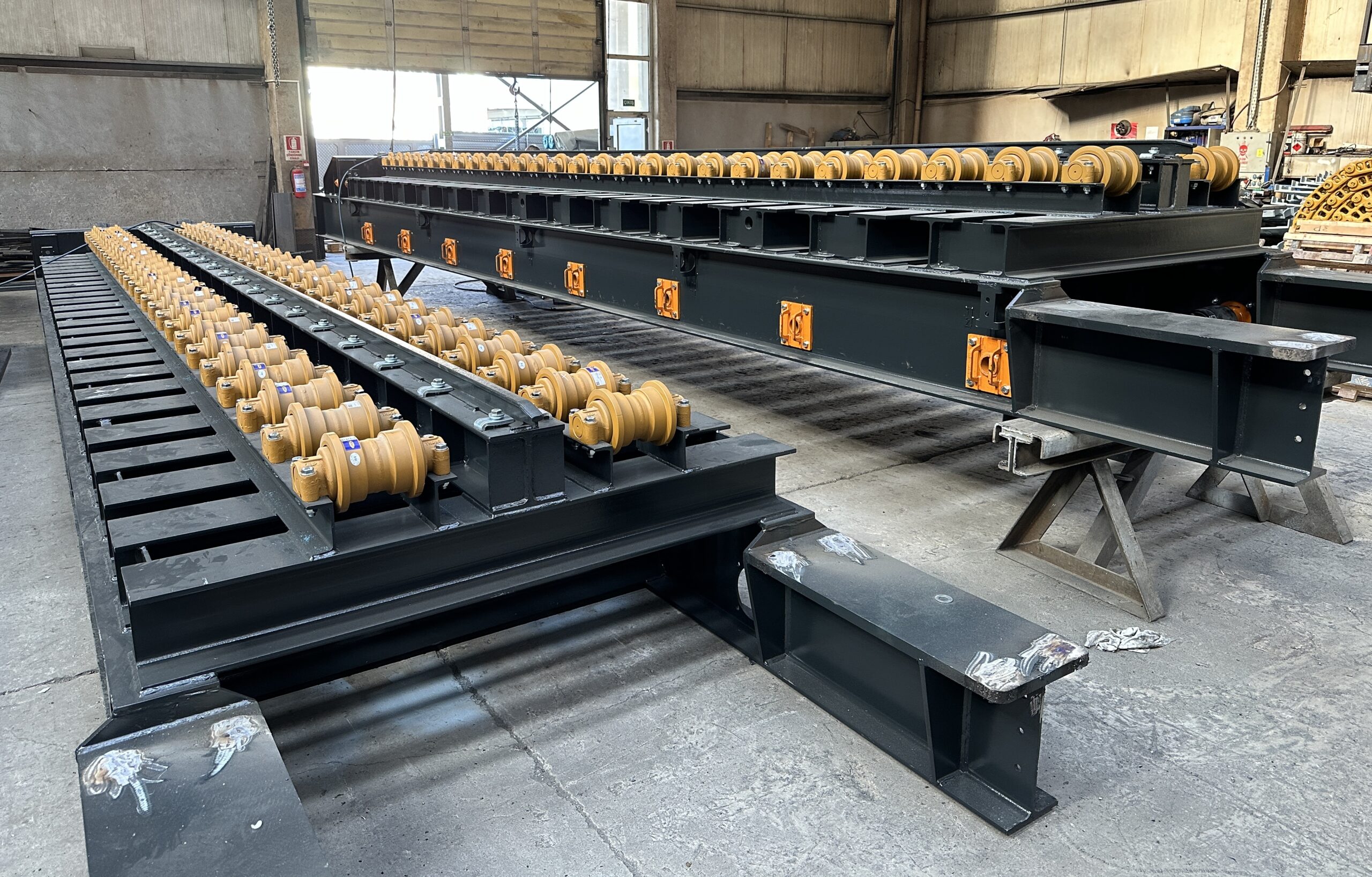
Standard D4, D6, D8, and D9 tractor/excavator-type heavy-duty, sealed and self-lubricating undercarriage components—including track rollers, chains, return rollers, idler wheels, and segmented rim sprockets—are used for maximum durability and global spare-part availability.